
Protocol
“What are the key exclusion criteria related to renal function?”
Review the cited criterion, then confirm the protocol version and any related definition or exception before recording the pre-screen.
DocCite product tour
DocCite searches the study documents you add, returns the passages that support a result, and opens the source at the relevant page. This tour uses the public ICH E6(R3) guideline included with the app.
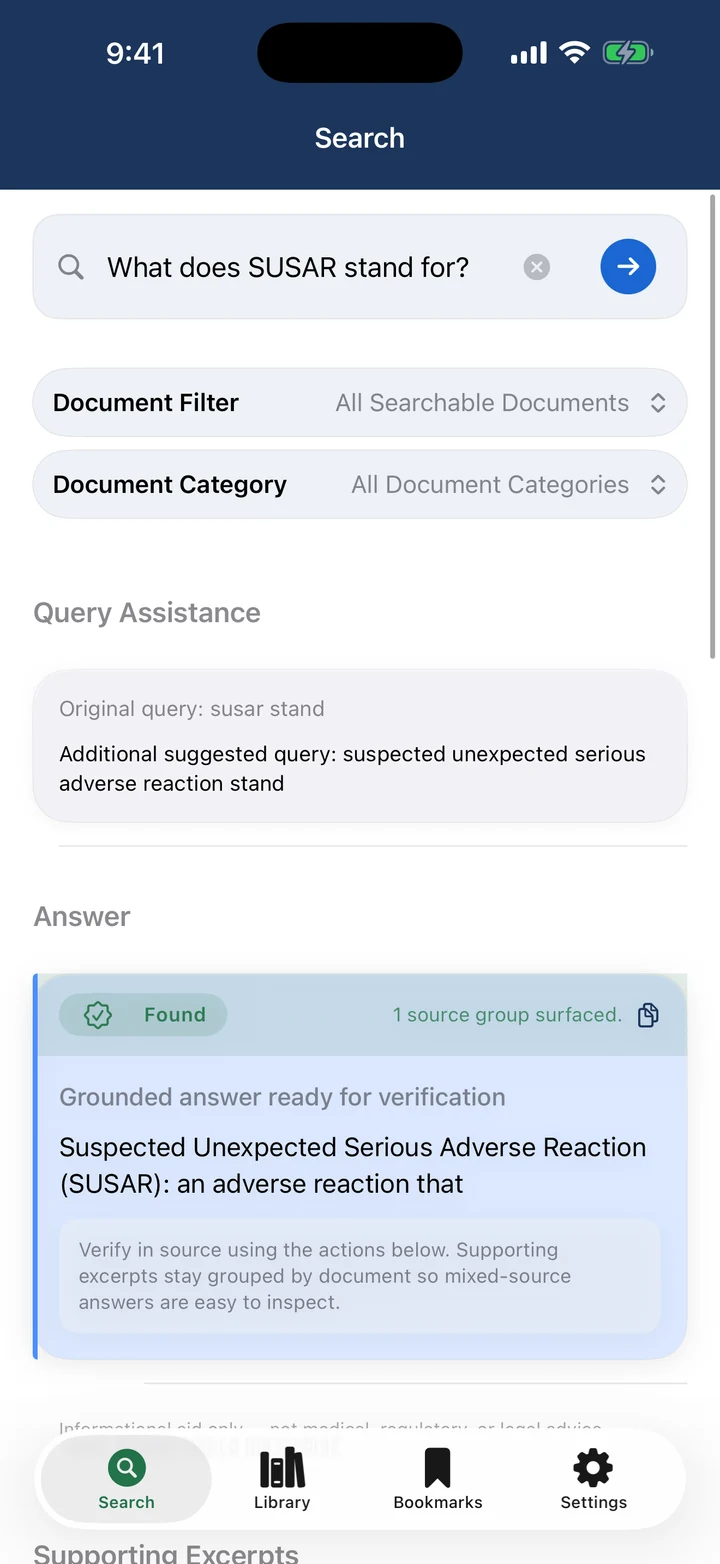
1. Ask a question
Enter a keyword, phrase, or natural-language question. In this example, the question is “What does SUSAR stand for?” DocCite searches the loaded guideline and returns a grounded answer with source groups available for verification.
2. Open the citation
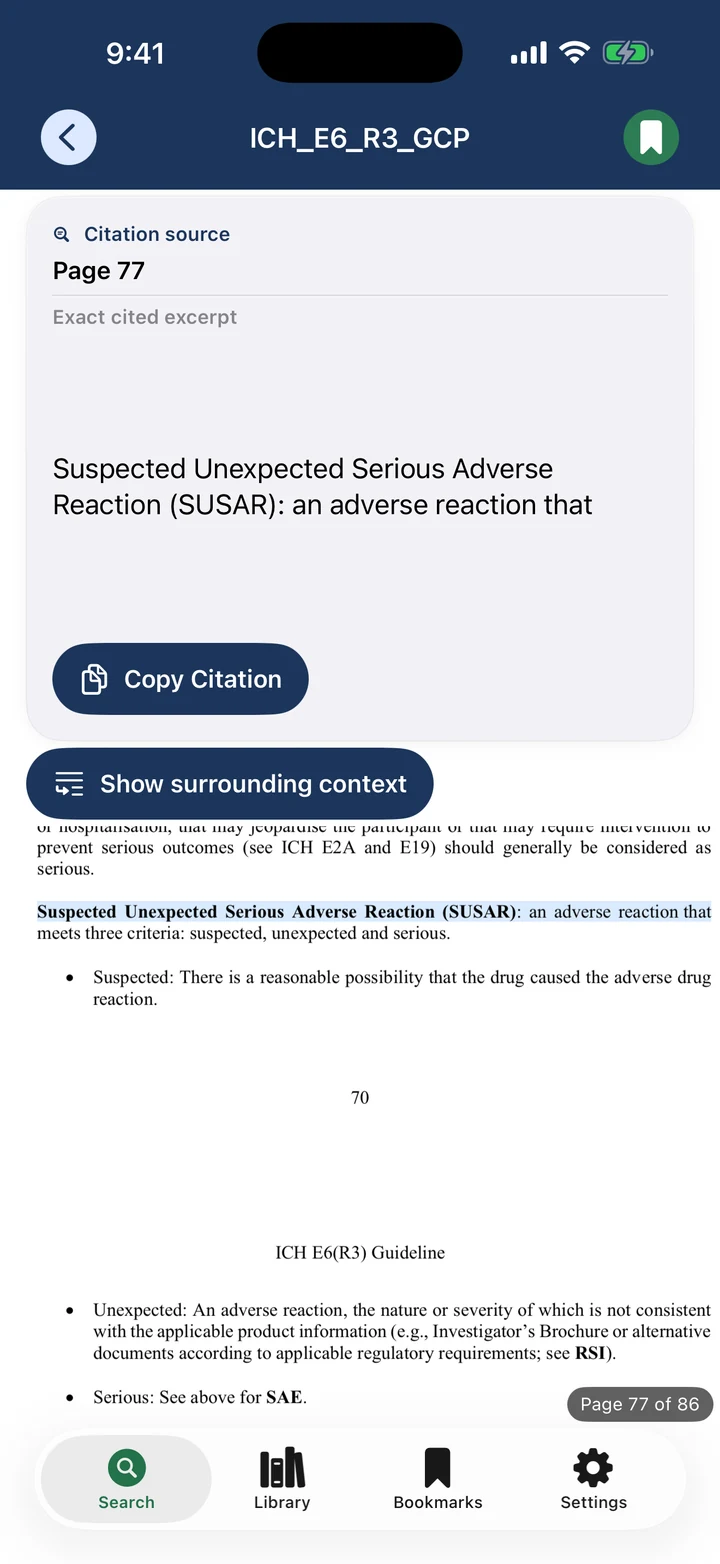
Open the cited result to review the highlighted passage and the text around it. The document, page, and source wording remain available for a pre-screen note, monitoring follow-up, or discussion with the investigator.
3. Compare document versions
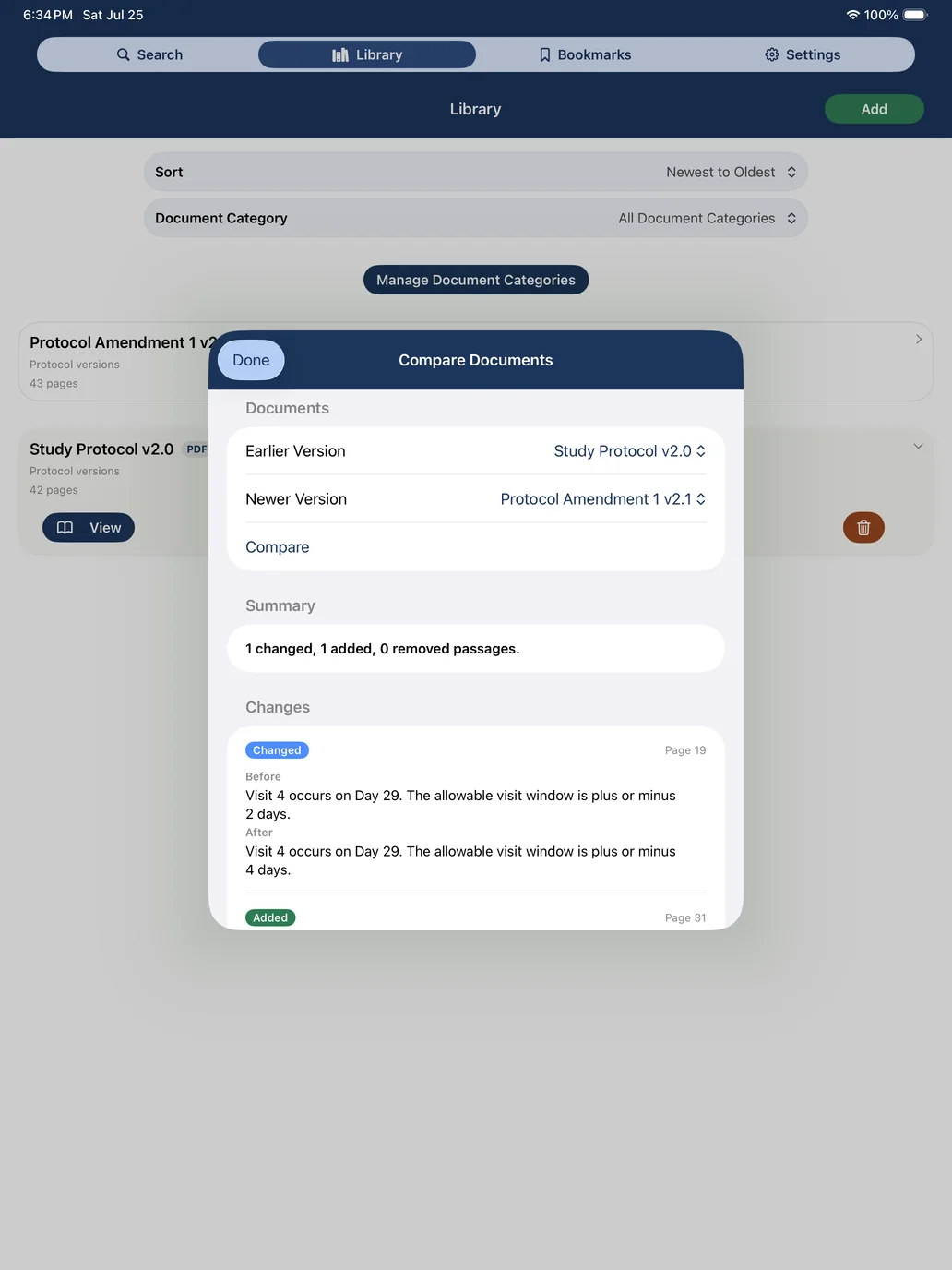
Choose an earlier document and a newer one. DocCite summarizes the differences, then shows each passage with its source page. In this example, the Visit 4 window changes from 2 days to 4 days, and a follow-up passage is added.
Document comparison is available in the current Apple app.
4. Copy the answer with citations
The Copy Answer button creates plain text that includes the question, answer, cited source, page, exact quoted excerpt, and verification reminder. The format below is the text DocCite copies for this example.
Question: What does SUSAR stand for?

Suspected Unexpected Serious Adverse Reaction (SUSAR): an adverse reaction that meets three criteria: suspected, unexpected and serious.

Cited sources:
[1] ICH_E6_R3_GCP — Page 77
    “Suspected Unexpected Serious Adverse Reaction (SUSAR): an adverse reaction that meets three criteria: suspected, unexpected and serious.”

Exported from DocCite. DocCite is a document-navigation aid, not the source of record; verify all details in the official document. Examples to try with your study documents
The wording and answer will depend on the documents you add. These examples show how the same search-and-review workflow applies to common clinical research files.
“What are the key exclusion criteria related to renal function?”
Review the cited criterion, then confirm the protocol version and any related definition or exception before recording the pre-screen.
“What changed for the Week 8 assessment?”
Compare the amendment with the prior protocol language and check which version was in effect for the visit.
“What does the consent form say about optional future use of samples?”
Open the cited ICF section and read the surrounding consent language before answering the participant's question.
“What is the allowable window for Visit 4?”
Check the cited schedule or procedure text, then confirm whether notes or footnotes modify the stated window.
DocCite helps you find and review document language. It does not determine patient eligibility, recommend treatment or dosing, assess safety, or replace clinical, regulatory, or legal judgment. Confirm the controlling source documents and follow your study procedures before acting.